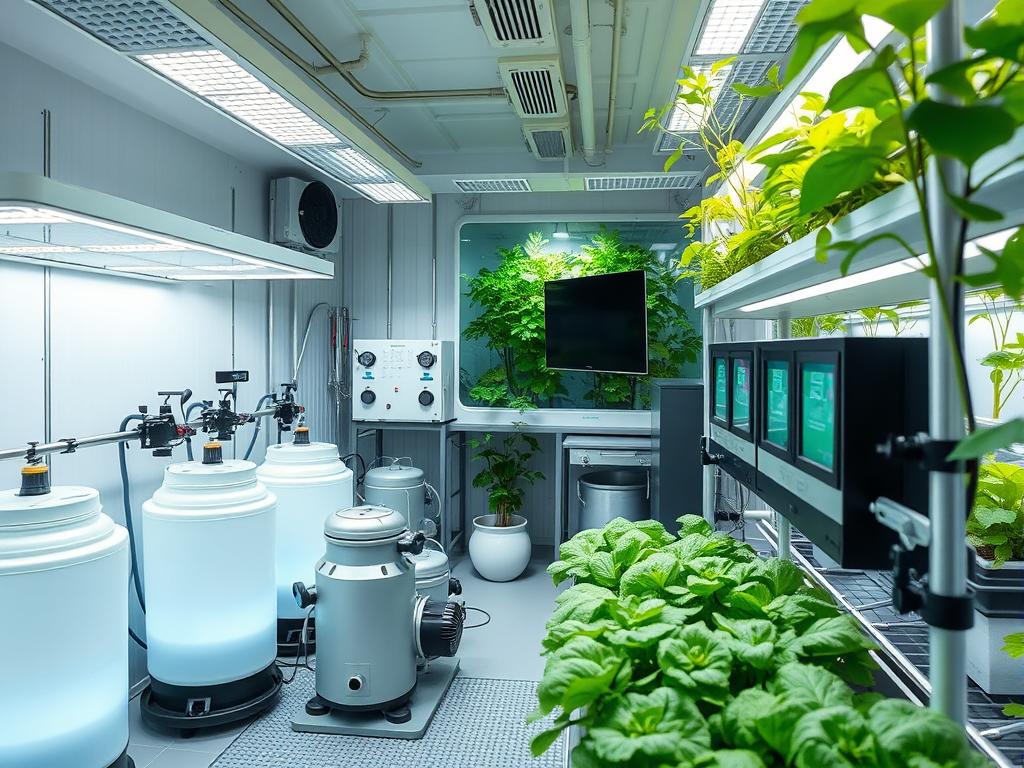
A Hydroponic Farm Is a Machine That Grows Food
Unlike a field farm that relies on soil, sun, and rain — all of which continue to exist if your tractor breaks down — a hydroponic operation depends entirely on its equipment. The moment your HVAC fails, your crops begin to suffer. The moment your pumps stop, your root zones dry out. The moment your grow lights go dark, your photosynthesis cycle breaks.
This mechanical dependency is what makes equipment breakdown insurance not just useful, but essential for commercial hydroponic operators.
What Equipment Breakdown Covers (and What It Doesn't)
Standard commercial property insurance covers your equipment if it's damaged by an external cause — fire, theft, a forklift accidentally hitting your control panel. What it does NOT cover is equipment that fails due to internal mechanical or electrical causes.
Equipment breakdown insurance fills that gap. It covers:
- Mechanical breakdown: A pump impeller fails due to wear and bearing deterioration
- Electrical failure: A power surge burns out the drivers in your LED lighting system
- Pressure vessel failure: An HVAC compressor loses refrigerant pressure and fails
- Motor burnout: Circulation pump motors overheat and stop functioning
The coverage pays for the cost to repair or replace the failed equipment — but that's often the least expensive part of the loss for a hydroponic operator.
The Real Cost of Equipment Failure: Your Crops
When your HVAC fails on a July afternoon in a non-air-conditioned greenhouse, the equipment repair cost might be $5,000. But the crop loss from a 48-hour temperature spike can be $30,000–$80,000 depending on your operation size.
Standard equipment breakdown policies cover the equipment. They do not automatically cover the crops that die as a consequence.
That's why the crop loss extension (sometimes called a "spoilage" or "consequential loss" endorsement) is the most important feature to look for in an equipment breakdown policy.
Understanding the Crop Loss Extension
A crop loss extension on your equipment breakdown policy means that when covered equipment fails, the policy pays for both:
1. The cost to repair or replace the failed equipment 2. The value of crops that died as a result of the failure
For a 15,000-square-foot lettuce operation running 12 crop cycles per year, a complete crop loss from an HVAC failure during peak summer could represent $60,000–$120,000 in lost crop value. With the extension, that's a covered loss. Without it, it's out of pocket.
Key Equipment Categories for Hydroponic Operations
When structuring your equipment breakdown policy, ensure these systems are covered:
HVAC systems. The most critical. Temperature control is non-negotiable for crop survival. Large commercial units represent $20,000–$150,000 in replacement cost and pose the greatest crop risk on failure.
Water pumps and circulation systems. Submersible pumps, recirculation pumps, reservoir pumps. In NFT and DWC systems, pump failure is immediately crop-threatening.
LED grow lighting systems. Modern commercial LED fixtures range from $500–$3,000 per unit. A facility with 200 fixtures has $100,000–$600,000 in lighting capital. Driver failures are common and expensive.
Environmental controllers. Automated climate control, CO2 systems, humidity controllers. These are the brains of a hydroponic facility — failure creates cascading problems.
Nutrient dosing systems. EC and pH monitoring equipment, automated dosing pumps. Malfunction can cause nutrient toxicity or deficiency in crop batches.
Equipment Breakdown vs. Property Insurance: The Decision Tree
Here's a practical guide to what each policy covers:
- Lightning strikes and destroys your transformer → Property coverage
- Transformer motor burns out from overload → Equipment breakdown
- Fire damages your grow light fixtures → Property coverage
- LED driver shorts out and burns out the fixture → Equipment breakdown
- Flood water destroys your pump controllers → Property coverage
- Pump controller fails from internal electrical fault → Equipment breakdown
The dividing line: external cause = property; internal mechanical/electrical failure = equipment breakdown.
Preventive Maintenance and Claims
Equipment breakdown insurers often ask about your maintenance program. A documented preventive maintenance schedule — quarterly HVAC service, annual pump inspections, regular filter changes — can both reduce your claim likelihood and support your claim when a failure does occur.
Keep records of all service calls, part replacements, and maintenance visits. If you need to file a claim, documented maintenance history demonstrates the failure was sudden and unexpected, not the result of long-term neglect (which is typically excluded).
What Equipment Breakdown Coverage Costs
For a small hydroponic operation (under 5,000 sq ft, under $500K revenue), standalone equipment breakdown coverage typically runs $800–$2,500 per year. With a crop loss extension, add $500–$2,000 depending on your crop value exposure.
For mid-to-large operations, equipment breakdown with crop loss extension can run $3,000–$8,000 per year — still a fraction of what a single uninsured HVAC crop loss event would cost.
Don't Wait for the Failure
The time to add equipment breakdown coverage is before the chiller goes down on the hottest day of summer. Once a claim event occurs, you can't retroactively add coverage.
Contact us to review your current property policy and determine whether equipment breakdown and crop loss extension coverage is in place. For most hydroponic operations, it isn't — and that's a gap we can close.