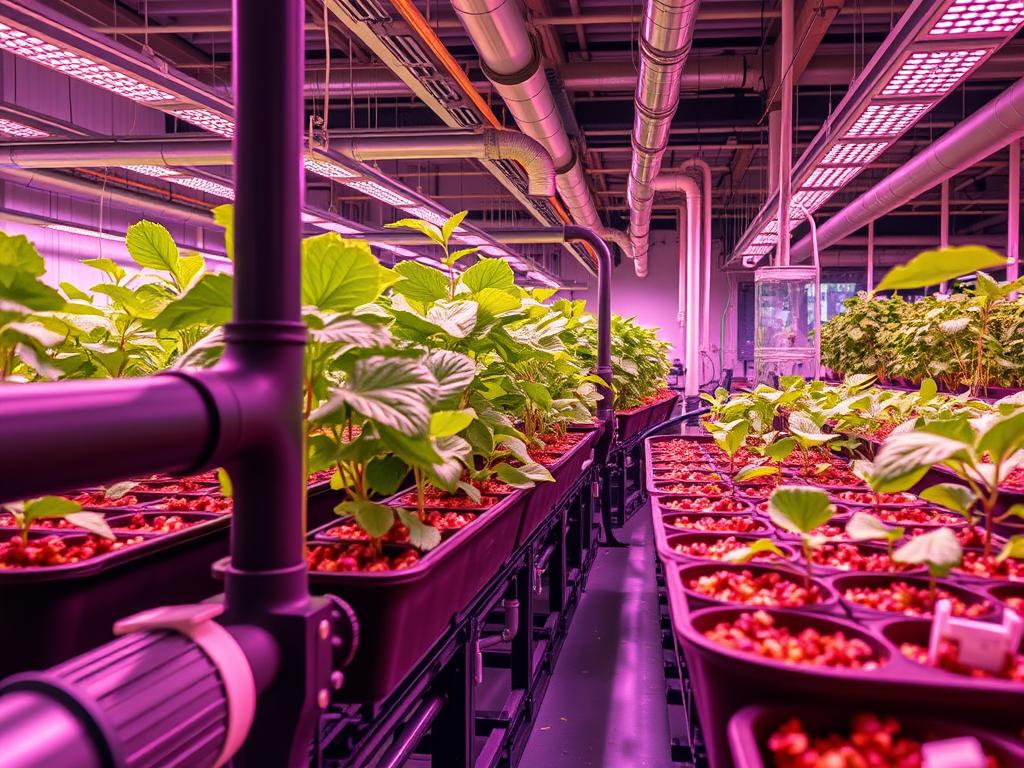
Water Is Your Greatest Asset — and Your Greatest Risk
Hydroponic farming runs on water. Thousands of gallons circulate through your growing systems every day. Reservoir tanks hold hundreds of gallons of nutrient solution. Irrigation lines run throughout your facility. For indoor farms in leased warehouse or greenhouse spaces, all of this water creates risks that field farmers never face.
A single pipe failure, a reservoir overflow, or a pump running dry and burning out a valve can result in significant property damage — not just to your own growing systems, but to neighboring tenants, the building structure, and equipment stored below a mezzanine level.
Your Own Property: When Water Damages You
Standard commercial property insurance covers water damage in certain circumstances, but the coverage details matter.
What's typically covered: - Sudden and accidental water damage from burst pipes - Sprinkler system discharge (if you have fire suppression) - Water damage from firefighting efforts - Storm-related water intrusion
What's typically NOT covered: - Gradual leaks (slow seepage from a fitting that's been loose for months) - Flood from external sources (requires separate flood insurance) - Equipment breakdown causing water release (covered under equipment breakdown, not property) - Water damage to your crops directly (covered under crop insurance)
For hydroponic operations in flood-prone areas or locations with poor drainage, a separate flood insurance policy — either through NFIP or a private flood carrier — should be evaluated.
Third-Party Liability: When Your Water Damages Others
This is where hydroponic operations face a risk that most general commercial insurance agents don't think about. If you're operating in a multi-tenant building — a warehouse, industrial park, or commercial greenhouse complex — your water systems can damage your neighbors.
Scenarios we've seen:
Reservoir overflow. A float valve fails overnight, a 500-gallon reservoir overflows, and nutrient water floods through a shared wall into the adjacent tenant's storage area, damaging inventory worth $25,000. Your general liability policy responds to this claim.
Irrigation line failure. An irrigation line on your second-level grow rack fails, and water drips down through the floor into the first-level tenant below, damaging their electrical panels and equipment.
Drainage backup. Your floor drains back up during a heavy storm, and nutrient water flows into the shared loading dock area, damaging another tenant's goods.
All of these scenarios involve your operations causing property damage to a third party — exactly what your GL policy's property damage coverage is designed for.
Ensure your GL policy: - Covers property damage to third parties from your operations - Doesn't exclude water damage specifically - Has adequate limits for your building context ($1M/$2M minimum for multi-tenant buildings)
Food Safety Liability: The Products Liability Risk
If your hydroponic operation grows food for human consumption, products liability may be your most significant liability exposure.
Products liability covers claims that your products caused harm after they left your facility. For a hydroponic lettuce farm, this means coverage if:
- A consumer gets sick from E. coli-contaminated lettuce traced to your operation
- A foodborne illness outbreak is linked to your herbs at a restaurant
- An allergen contamination claim arises from your growing or packaging operations
These claims can be significant. A multi-state foodborne illness outbreak can generate hundreds of claims simultaneously. Even a localized incident involving a restaurant customer requires legal defense.
What products liability requires from you: - Documentation of your food safety practices (FSMA compliance, GAPs where applicable) - Traceability records linking your product to specific customers and dates - Prompt notification to your insurer if a claim or recall situation arises
Some insurers will ask about your food safety certifications (GlobalG.A.P., FSMA Produce Safety Rule compliance, SQF certification) when underwriting products liability. Better documentation typically means better rates.
Farm Tours and Agritourism Liability
Many indoor farms have added agritourism components — tours for schools, restaurants, farm-to-table dinners, market events. Each visitor to your facility is a potential GL claim.
Wet floors (constant in hydroponic facilities), elevated racking systems, chemical storage, and the general unfamiliarity of visitors with growing environments create slip-and-fall exposure. If you host events, ensure your GL policy covers:
- Scheduled farm tours
- Educational programs with children
- Farm-to-table dining events
- Market-day retail sales
Some policies exclude or limit coverage for events. If you're monetizing farm visits, verify your GL explicitly covers that activity.
Certificate Requirements from Grocery and Distribution Partners
If you sell to grocery chains, food distributors, or food service companies, you'll face certificate of insurance requirements. Typical requirements:
Coverage requirements: - General liability: $1M per occurrence / $2M aggregate (minimum) - Products liability: Often $2M–$5M (commercial accounts) - Additional insured: The distributor or grocery chain named as additional insured on your policy
Certificate language: - Primary and non-contributory (your policy is primary, doesn't share with the client's policy) - Waiver of subrogation in favor of the additional insured - 30-day notice of cancellation
We handle certificate issuance same-day. If you've lost a distribution contract because your certificate wasn't ready, that won't happen again.
Building a Complete Water Risk Program
For commercial hydroponic operations, a complete water risk management approach includes:
1. Commercial property with water damage coverage (including pipe failure and water intrusion) at replacement cost 2. Equipment breakdown covering mechanical and electrical failure of pumps, valves, and irrigation systems 3. Flood insurance (if in a FEMA flood zone or area with drainage risk) 4. General liability with products liability and explicit coverage for third-party property damage 5. Business interruption covering revenue loss during restoration after a water-related shutdown
Contact us to review your current coverage against this framework. Many hydroponic operations have gaps in one or more of these areas — often discovered only when a claim occurs.